Between 2011 and 2016, Betty Finke was a regular columnist for The Arabian Magazine. Now some fifteen years down the line, we thought it would be a good time to share Betty’s articles, which remain as pertinent as ever.
Usually it is the show champions that get all the publicity, or the race winners or endurance heroes. Which is why I would like to use this space to write about a horse that wasn’t any of these things.
I would like to dedicate this edition’s column to a little bay mare I used to know, who lived not far from me. She was born in 1960, back in the days when there were few Arabian horses in Germany, no shows and, in fact, very little in the way of organised Arabian breeding. This mare wasn’t even born at a proper stud farm, but in a zoo.
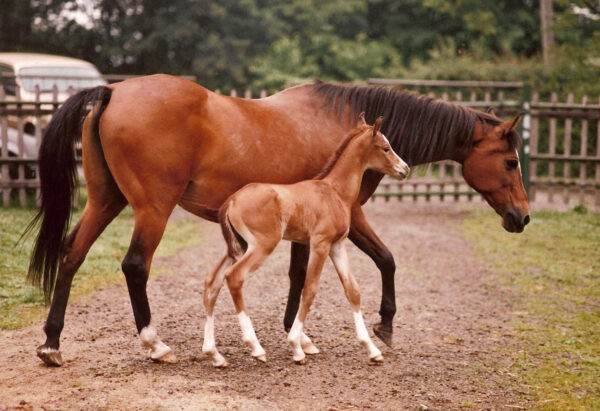
Her name was Polska, and if you should suspect from this that she was of Polish breeding, then you would be right. She was, in fact, pure Polish, although that particular term hadn’t been invented yet. Both her parents came from Poland, but there is nothing in Poland to document how, or why, they ended up in Germany, nor were they ever registered in the German Stud Book. They don’t appear to have had any other foals.
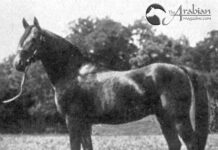
It was actually very good breeding. Both horses came from old Polish lines, with desert blood close up. Her sire was the son of the famous Polish Derby winner Kaszmir; her dam carried a double cross to the celebrated mare Gazella II. It was Gazella II whom Polska most closely resembled. Like her, she was a bright bay with a blaze and white feet. She was quite small, like most of the old Polish horses, with a straight, but refined head.
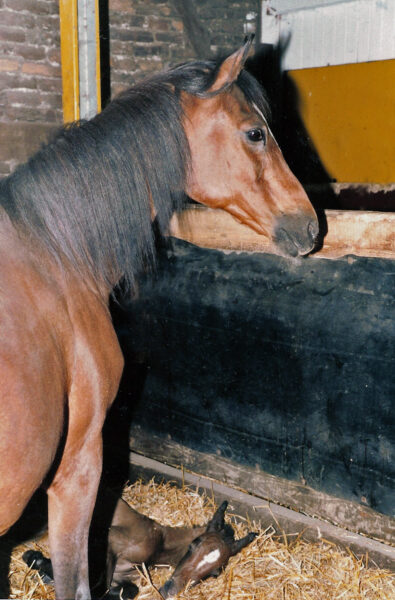
Polska was born, and spent most of her life, at a German zoo which also kept a small stud of pure-bred Arabian horses, all of which, stallions included, did double duty in a childrens’ riding school and probably infected many kids with the Arabitis virus along the way.
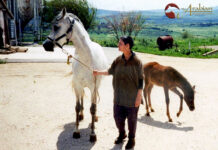
A zoo is probably not the very best place to breed horses. The stallions never saw a pasture; the mares had it a little better, because at least when they had foals, they were put out to graze. The conditions may have been the reason why many of the Arabians bred there tended to be small and to look a bit poorly. When I first met Polska, it was in a mud paddock at the zoo she shared with two other old mares. She was 22 years old with a foal at foot – her seventeenth. She was very thin, unlike the foal, and her neck looked upside down. I can’t honestly say that she made much of an impression at first.
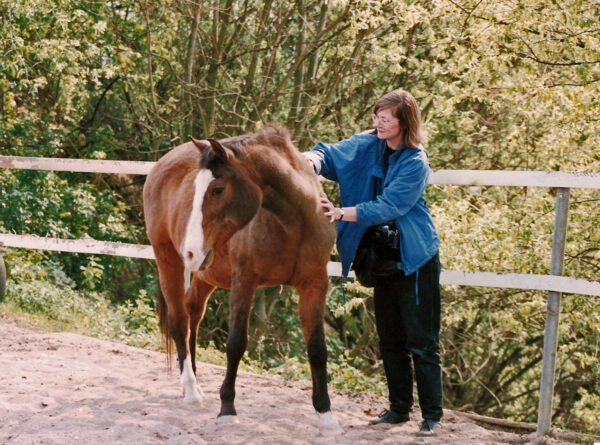
That same year, the breeding programme at the zoo was disbanded and Polska, together with another old mare, came to live with a small breeder not far away. Both were in foal and duly delivered lovely fillies the next year which, given a much better environment, both grew into magnificent mares. And they blossomed. Polska turned into a totally different horse. Less than a year after she had arrived, she looked 10 years younger. The ribs disappeared, and so did the upside-down neck. Her coat shone and her eyes sparkled. Her legs were totally straight and totally clean. No one would ever have guessed her true age.
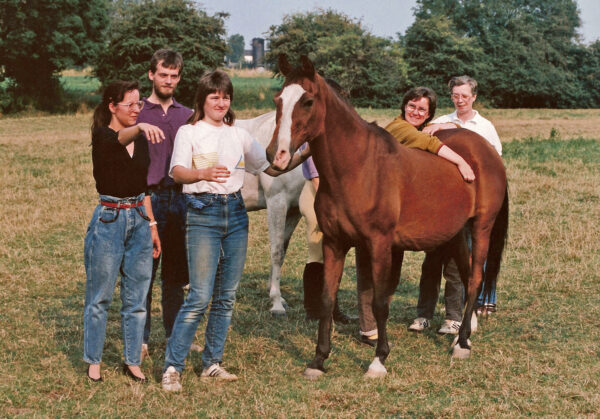
And that is the way she remained until her death, which was really quite unexpected and hit us all pretty hard. Her owner, an elderly lady herself, loved her passionately, and they were practically a fixture in my life for eight years, as I went there regularly and took tons of photos of Polska and her ever-growing family of children and grandchildren. When she died, she was 31 years old and carrying what would have been her twenty-second foal. Not because her owner was greedy, I must add, but because Polska was a born mother, and she desperately wanted a foal. She had actually been retired, but she promptly appropriated the foal of the mare stabled next to her. She avidly watched the birth, and she would follow that foal all across the pasture thinking it was really hers. Even at a flat-out gallop if she had too; after all, she was the granddaughter of a Derby winner! So she was bred one last time, to a young stallion in the neighbourhood who had never covered a mare before. At least he benefited from her experience, although he made a spectacle of himself in the process, it had to be said. But the foal was not meant to be. Polska was gone, and for all of us who had known and loved her, it was like the end of the era.
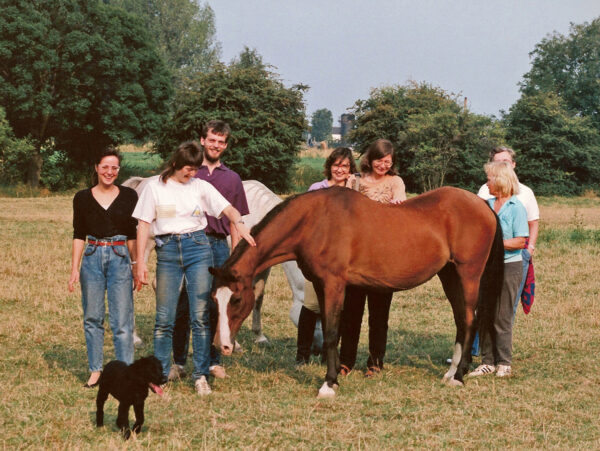
So what remains, now that both Polska and her owner are long gone? This little bay mare, obscure as she might be, really embodied what Arabian horses are all about. She was a riding horse as well as a broodmare that gave birth to and raised 21 live foals and was never ill or lame, despite spending most of her life in less than ideal conditions. Her children included eight broodmares, whose legacies live on at stud farms in Germany and Denmark. Two of her sons were licensed breeding stallions whose descendants are still around; one of them was quite influential in breeding part-bred riding ponies. Her descendants may not be show champions, but they are usually tough, healthy, fertile, good riding horses, and long-lived – original Arabian characteristics that are all too often forgotten.
As I write these lines, I am struck by the uneasy thought that if Polska were alive today, she would probably be delivering embryo transfer foals for some more glamorous, highly-prized show mare. And that would really be a shame.
Because there’s one last footnote to this story. Early in 2011, I was attending the stallion licensing of the German Association for Arabian Sports Horses. There wasn’t an awful lot to be excited about. And then, a magnificent bay colt entered the ring – typey, charismatic, well-conformed, and with beautiful movement. I looked into the catalogue to see how he was bred. I couldn’t believe my eyes at first. I looked again, at his dam, second dam, third dam, fourth dam – yes, he was descended from Polska in tail female line. And he was stunning. He got his license, with the best notes of all the stallions shown. I was ecstatic. Heck, I nearly cried.
So, while all those glamorous show champions might be in the limelight, don’t forget the real backbone of the breed: the broodmares, the unsung heroines of the breed that may never see the inside of the show-ring and may not look like models themselves, but quietly and steadily deliver the goods. The best show mares do not automatically make the best broodmares, and vice-versa. And don’t forget the old bloodlines, either, even if they may not be fashionable at this moment. Some day, we might be glad that we still have them.