As we delve into our extensive archives, we share this brilliant two-part feature from Joe Ferriss, first published in March 2012, where he takes a look at two Blunt-bred Arabians who influenced Egyptian breeding – the mare, Serra, and the stallion, Rustem.
For many the name Crabbet and Lady Anne Blunt, with her husband Wilfrid, are names that are a permanent part of the DNA of Arabian breeding worldwide. Their vision for the Arabian horse forged and distilled in the late 19th century has become a gift to the world of the Arabian horse. The recipe was simple. Take some choice Bedouin-bred Arabians horses that the Blunts acquired from the desert at considerable challenge and sacrifice and blend them with some of the treasures they found in Egypt descending from horses of the famed breeder Ali Pasha Sherif. There are scarcely any Arabian horses worldwide that are not in some way influenced by the ancestral legends created by the Blunts. The fabled horses from the nation of Egypt are among those impacted by the legacy of the Blunts to the point that every single living straight Egyptian horse today carries multiple lines to horses of the Blunts’ breeding. This feature singles out two of those horses: one mare, Serra, bred by Lady Anne Blunt and born in Egypt just two years before Lady Anne Blunt died and one stallion, Rustem, born in England and taken to Egypt a few years after Lady Anne Blunt passed. For part one, click here.
Rustem
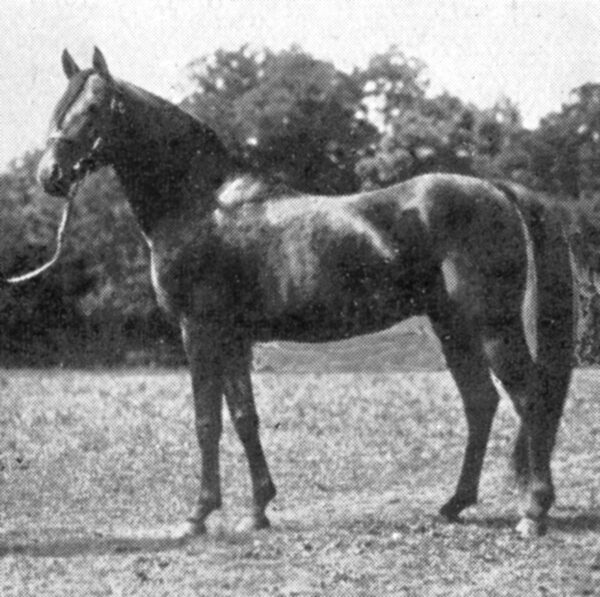
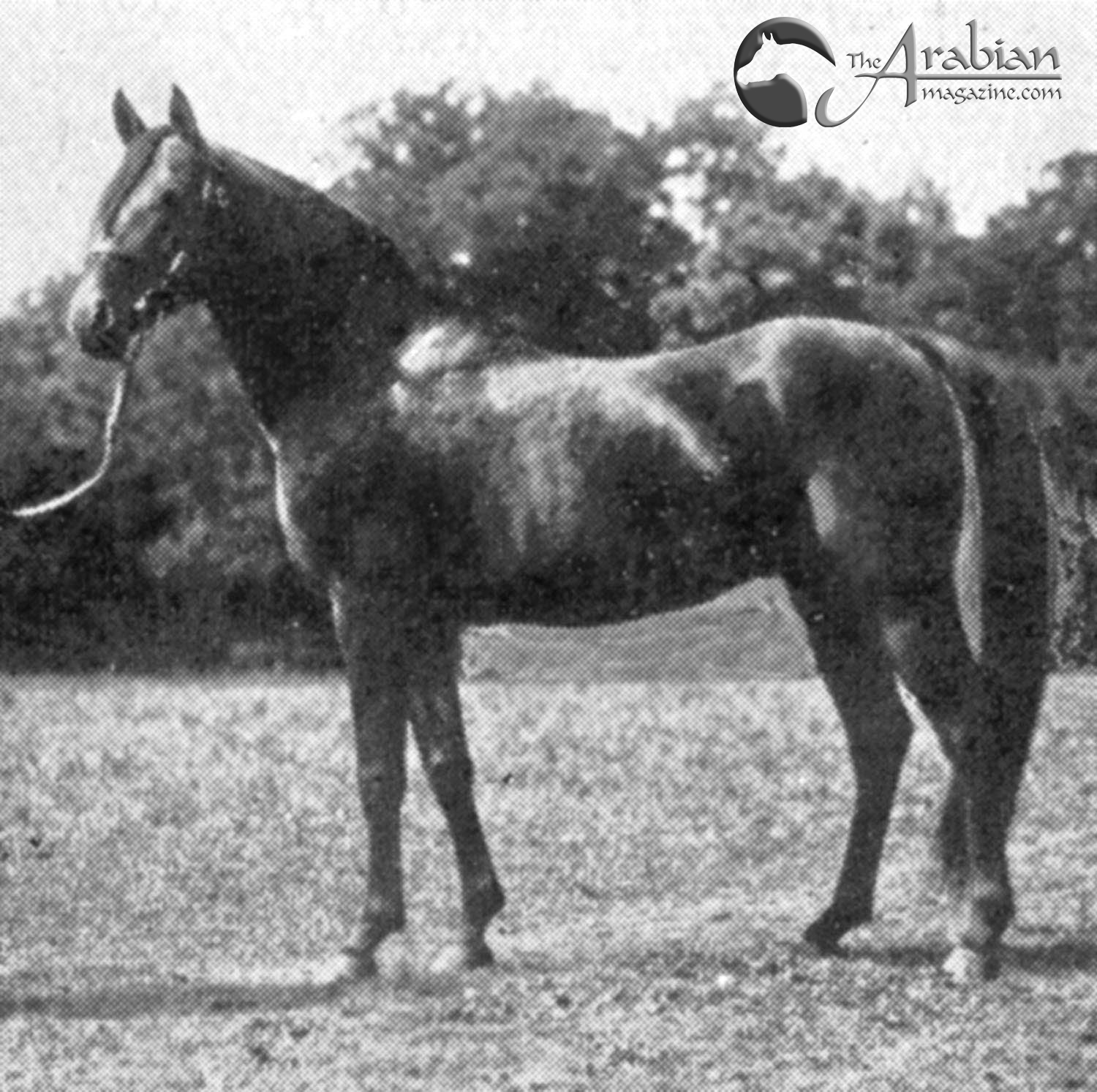
Unlike Serra who was born in Egypt, Rustem was born in England at the Blunt’s Crabbet Stud in 1908. One could say Rustem represents the recipe that so many early Crabbet horses were known for: the blending of the Ali Pasha Sherif bred horses from Egypt with the desert-bred Blunt foundation animals that they obtained outside of Egypt. In Rustem’s case he is about 50% Ali Pasha Sherif and 50% Blunt, with his two grandsires Mesaoud and Merzuk representing the Egyptian breeder Ali Pasha Sherif and his two grandams, Queen of Sheba and Rose of Sharon, representing the Blunt-bred Bedouin sources that were outcross to the Ali Pasha Sherif blood.
Like Serra, assembling a complete list of Rustem’s get requires multiple sources. In the AHA DataSource, 25 Rustem get are listed, in The Straight Egyptian Index by Hansi Heck-Melnyk there are 18 get listed for Rustem, and there are also some additional get in Vol II of the AHS Stud Book of England. Additional get were photographed and identified in Egypt in 1932 by Jack Humphrey, the agent for W R Brown mentioned previously, at Prince Kemal El Dine’s stud farm, but these are not found in any stud books. Working from these various sources, I have created a list of all the identified get of Rustem:
Rustem foals bred in England
- Rustnar, 1912 bay stallion out of Narghileh (BLT*), exported to Argentina
- Ferda, 1913 bay mare out of Feluka (BLT), exported to the US
- Kamar, 1913 chestnut stallion out of Kantara (BLT), exported to Egypt, not used
- Najib, 1914 brown stallion out of Narghileh (BLT), used in England
- Fauzan, 1914 bay stallion out of Feluka (BLT), not used
- Fantass, 1915 chestnut stallion out of Felluka (BLT), not used
- Batran, 1915 chestnut gelding out of Betina (BLT), not used
- Karun, 1915 chestnut stallion out of Kantara (BLT), exported to Egypt, not used
- Simawa, 1915 bay mare out of Sarama (BLT), exported to the US
- Arusa, 1915 bay mare out of Abla (BLT), used in England
- Silfa, 1915 bay mare out of Selima (BLT), used in England
- Rayya, 1915 brown mare out of Riada (BLT), dam of Raseyn who went to the US
- Fursan, 1916 bay stallion out of Feluka (BLT)
- Mansour, 1918 bay stallion out of Malaka (BLT), not used
- Rafina, 1919 chestnut mare out of Risala (BLT), exported to Australia
- Merouan, 1921 chestnut stallion out of Malaka (BLT), born in England after Rustem’s departure.
*Blunt
Rustem foals bred in Egypt
- Ibn Rustem, 1922 grey stallion out of Bint Gamila (RAS), used at RAS
- Bint Nafa El Saghira, 1922 grey mare out of Nafaa El Saghira (RAS)
- Bint Rustem, 1922 brown mare out of Bint Hadba El Saghira (RAS), used at RAS
- no name given, 1923 bay stallion out of ‘Nizma’
- no name given, 1924 grey stallion out of ‘Rizkia’
- Rasala, 1927 bay mare out of Serra, used by T G B Trouncer
- no name given, 1927 stallion out of ‘Rizkia’
- Ibn Bint Dalal, 1928 chestnut stallion out of Bint Dalal
- Rasmeia, 1929 bay mare out of Bint Rabdan
- El Dahma, 1929 brown mare out of Bint Obeya, used at RAS
- no name given, 1929 grey mare out of Serra
- no name given, 1929 bay stallion out of Feyda
- no name given, 1930 grey mare out of ‘Hosni Higazia’
- no name given, 1930 stallion out of Bint Dalal
- no name given, 1930 chestnut mare x a daughter of Serra
- no name given, 1930 brown mare x a daughter of Serra
- no name given, 1931 stallion out of Feyda
- no name given, 1931 chestnut stallion x a daughter of Serra
- Mekdam, 1932 bay stallion out of Bint Bint Dalal, went to Inshass with his dam
- Metsur, 1932 chestnut stallion out of Bint Serra I, exported to the US, died without issue
- Zareef [Zareif], c. 1930s grey stallion out of Serra, used by T G B Trouncer.
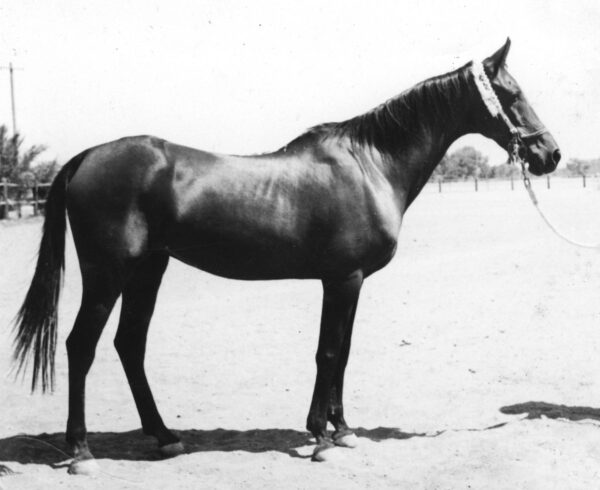
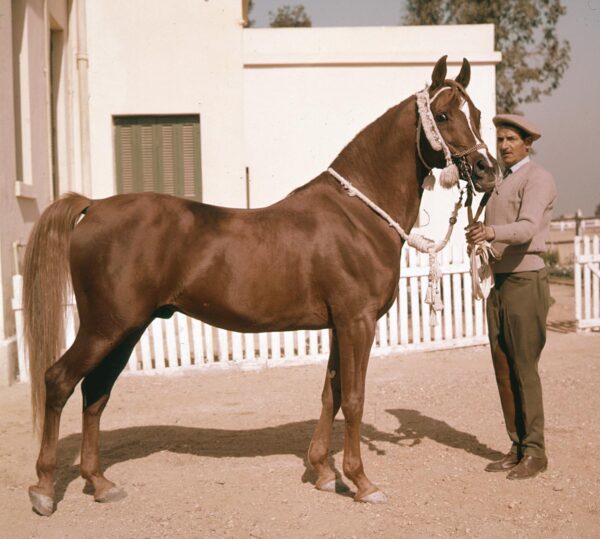
In this list there are a number of horses cited as ‘no name given’ who do not appear in any stud book but we know of their existence from pictures of them and comments in the article in Khamsat Vol. 4, No. 3, Egypt in 1932: A Report by Jack Humphrey to W.R. Brown ed. by Carol Lyons. The dams of some of the above I have placed in quote marks i.e. ‘Nizma’, ‘Rizkia’, and ‘Hosni Higazia’ because these mares are referred to by Humphrey, but we cannot determine who they actually are as they have not been identified in any stud books or similar records. ‘Hosni Higazia’ might be the ‘…the 19-year-old mare called Hegazieh’ in Humphrey’s comments, a Koheilet El Ayala of Nejd later in the stud of T G B Trouncer who got horses from Prince Kemal El Dine.
This brings up an interesting point to the reader. Stud books and other traditional forms of documentation that we are used to in the Western world do not always provide a complete record of what may have existed among Middle Eastern breeders. Prince Kemal El Dine had a fascination with Ali Pasha Sherif and Lady Anne Blunt’s breeding so these mares, although unidentified to us, fit his criteria for authentic breeding stock or he would not have incorporated them in his stud. Perhaps some future researchers may uncover who ‘Nizma’, ‘Rizkia’ and ‘Hosni Higazia’ actually are, but for now only the Prince knows.
As can be seen in the above list Rustem’s use as a sire in England would not only benefit European breeders, but also bloodlines in Argentina, Australia and the US. Rustem daughters Ferda and Simawa come forward into American bloodlines along with Rayya, who produced the famous Skowronek son Raseyn. Rustnar was used in England before being exported to Argentina where he became a stallion for Don Hernan Ayerza and is the grandsire of Aire, a mare imported back to the US from Argentina. Najib sired the US imported mare Hilwe, who when bred to Mirage produced Agwe the sire of famed stallion Jaspre (ex Roda). Ferda left descendants in England before being imported to America in 1926 by W K Kellogg where she became famous for the double Rustem-bred stallion Ferseyn, sire of the legendary Ferzon. So one can see that Rustem’s English tenure at stud already had taken root for later global influence.
Just a few years after the passing of Lady Anne Blunt, the 12-year-old Rustem arrived in Egypt coming to the stud of Prince Kemal El Dine. The details of his export are not clear, but Colin Pearson indicates that Prince Kemal El Dine bought Rustem from Wilfrid Blunt in 1920. In addition, two of Rustem’s sons on the list above, Kamar and Karun, were among the large group of stallions that Lady Wentworth sold to the RAS in 1920, but there is no evidence that they were used in Egypt.
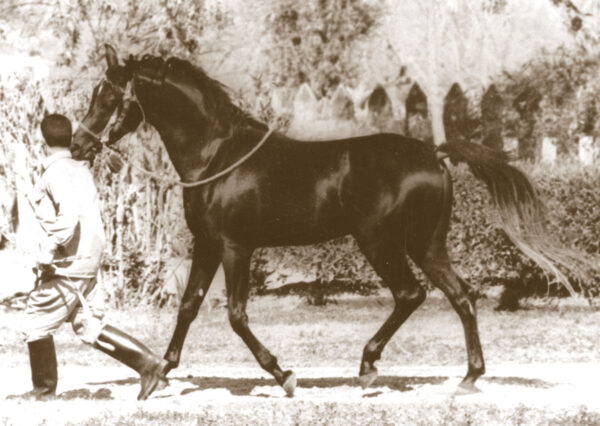
In Egypt, Rustem’s first foals were from RAS mares and Bint Rustem (ex Bint Hadba El Saghira) stands out among them in influence. From her daughter Hind, Bint Rustem established an enormously influential family. Hind will be immortalised for her lovely daughter Yosreia, dam of world-renowned sire Aswan. The Morafic son Khofo is also from the Yosreia line and taking into account how many times his beautiful daughter Bint Magidaa, dam of Ruminaja Ali, appears in today’s Egyptian pedigrees, Bint Rustem is a much repeated ancestor. Also from Bint Rustem’s line comes Australian National Champion Mare 27 Ibn Galal-5, one of the leading dam lines of champions including Simeon Shai. Bint Rustem produced the stallion Mashhour (ex Shahloul), sire of the important Egyptian Agricultural Organization (EAO) stallion Seef. One of Europe’s famous Rustem descendants is the handsome and athletic black stallion Gharib, who has two close lines to Rustem.
The last Rustem foal bred at Prince Kemal El Dine’s stud was Mekdam (ex Bint Bint Dalal), who became an important stallion for King Fouad’s famed Inshass Stud. How does Rustem’s son Mekdam appear so many times in today’s pedigrees? He is also the grandsire of the celebrated chestnut stallion Anter. So many of today’s internationally renowned Egyptian horses trace to Anter, each time adding more crosses to Rustem. Mekdam is also found in straight Egyptian lines through his daughters Bint El Samraa, Shadia (INS) and Yamama (INS). Rustem’s final son was Zareef out of the lovely Serra, who introduced this feature. He was likely foaled at T G B Trouncer’s Sidi Salem Stud as Trouncer purchased a number of Prince Kemal El Dine’s horses when he dispersed. As mentioned above, Zareef also is found in today’s Egyptian bloodlines.
The bulk of Rustem’s stud career in Egypt was for his owner, Prince Kemal El Dine. While it is not known what became of many of the horses the Prince bred, the few Rustem get that bred on eventually became very significant in Egyptian breeding. In fact, just a quick count in the pedigree of Paris World Champion Stallion True Colours reveals that Rustem appears in his pedigree 42 times!
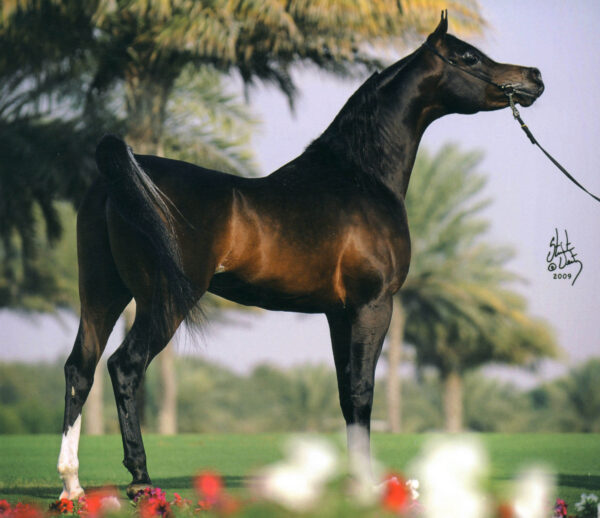
While stories of distant ancestors of Arabians are often thought of as academic by some, they are nonetheless interesting because they show the very fabric of today’s Arabian pedigrees and explain a little about how they came into existence. In addition, increasing DNA research seems to indicate that distant ancestors play a larger role in today’s horses than one might assume. Realising that the lovely filly Serra was born in Egypt just shortly before Lady Anne Blunt’s passing and that one of her prized stallions, Rustem from England, would return to Egypt shortly after her passing, one cannot help but feel that these two horses would have given her a great sense of fulfilment in her quest to preserve the Arabian horse for all to enjoy in the future.