As we delve into our extensive archives, we share this brilliant two-part feature from Joe Ferriss, first published in March 2012, where he takes a look at two Blunt-bred Arabians who influenced Egyptian breeding – the mare, Serra, and the stallion, Rustem.
For many the name Crabbet and Lady Anne Blunt, with her husband Wilfrid, are names that are a permanent part of the DNA of Arabian breeding worldwide. Their vision for the Arabian horse forged and distilled in the late 19th century has become a gift to the world of the Arabian horse. The recipe was simple. Take some choice Bedouin-bred Arabians horses that the Blunts acquired from the desert at considerable challenge and sacrifice and blend them with some of the treasures they found in Egypt descending from horses of the famed breeder Ali Pasha Sherif. There are scarcely any Arabian horses worldwide that are not in some way influenced by the ancestral legends created by the Blunts. The fabled horses from the nation of Egypt are among those impacted by the legacy of the Blunts to the point that every single living straight Egyptian horse today carries multiple lines to horses of the Blunts’ breeding. This feature singles out two of those horses: one mare, Serra, bred by Lady Anne Blunt and born in Egypt just two years before Lady Anne Blunt died and one stallion, Rustem, born in England and taken to Egypt a few years after Lady Anne Blunt passed.
Serra
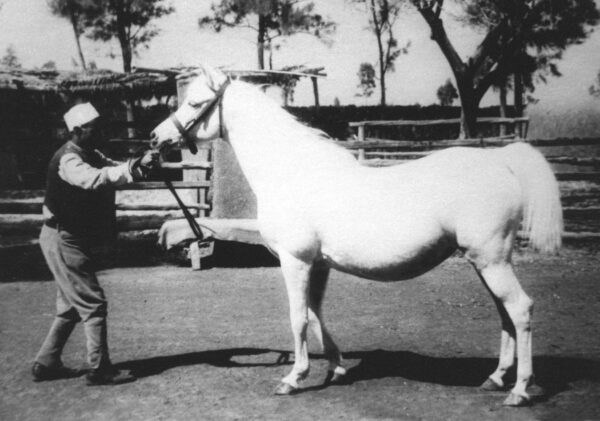
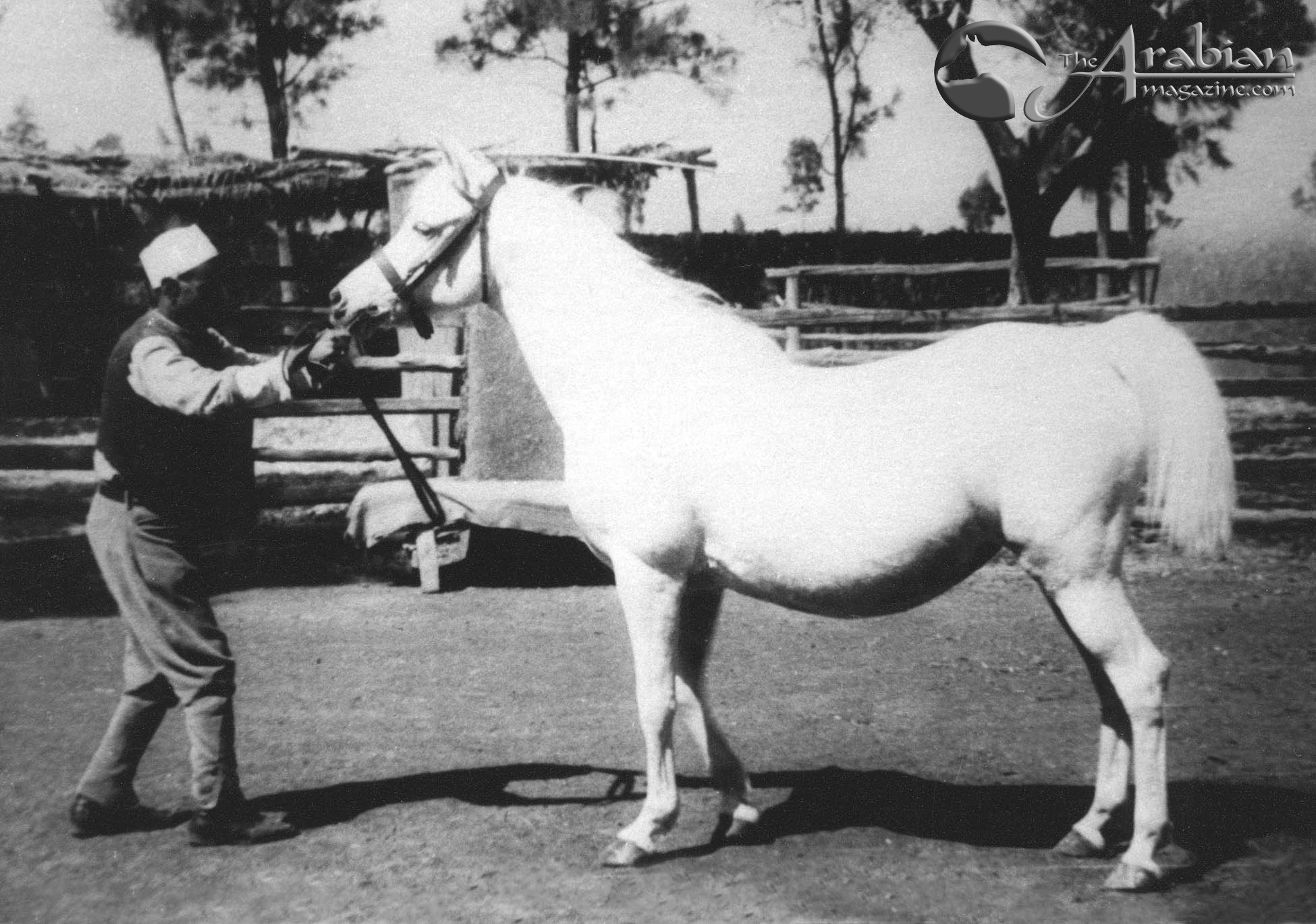
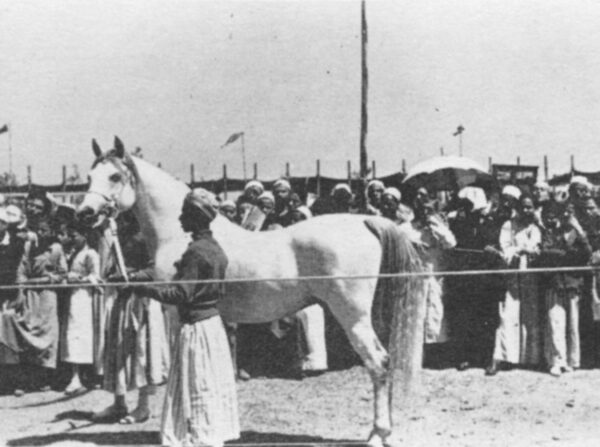
Also referred to as ‘Sara’ and ‘Sit Serra’ in Egypt, Serra was a lovely grey mare tracing in every line of her pedigree to the celebrated horses of Ali Pasha Sherif. She was born in 1915 at Sheykh Obeyd, the beloved stud in Egypt to which Lady Anne Blunt retreated in her final years. As a young filly Serra no doubt brought some joy to Lady Anne Blunt, as she turned out to be the last known foal of her prised mother Jemla, and sired by the Ali Pasha Sherif stallion Sahab. Serra was born just two years before Lady Anne Blunt died in Egypt so she would not realise how Serra’s legacy would unfold. Upon the passing of Lady Anne Blunt, Prince Kemal El Dine took a keen interest in the horses of her breeding, particularly because he desired to gather horses of a great concentration of Ali Pasha Sherif bloodlines. So Serra would come to the Prince’s stable sometime around 1920, although the specific date is not recorded.
Thanks to the late Carol Lyons’s collection of historical material, the correspondence of the American Jack Humphrey’s trip to Egypt in February 1932 provides some insight into this splendid mare Serra. Jack Humphrey was acting as agent for the American Arabian breeder W R Brown. When Humphrey was visiting Prince Kemal El Dine, he discovered the mare Serra. He was immediately impressed not only with her overall quality, but also of the quality of her produce regardless of sire. Describing Serra he noted: ‘… an old white mare, heavy in foal to Rustem. This is the outstanding animal in the Stud… I tried hard to get a price on her but nothing doing.’ (1) Several years later, H E Fouad Abaza Director of the Royal Agricultural Society (RAS), while visiting the Sidi Salem Stud of T G B Trouncer, remarked in a later report: ‘…Sit Serra was renowned as being one of the best mares in the land of the Pharoahs.’ (2) Both men were very impressed with Serra and her produce.
Some horses bred by the various private Royal family members or other private breeders would not necessarily end up listed in official stud book records, so it is helpful to see correspondence from people who actually saw the horses to get a better picture of horse breeding in the past. Reviewing Humphrey’s correspondence helps in piecing together just how many foals Serra actually produced. Also the report on horse breeding in Egypt by H E Fouad Abaza identifies animals that do not show up in studbooks. Using the current studbook records and comparing them to these various correspondences from the past, I have created the following list of likely produce of Serra:
- Bint Serra I (ex Sotamm) 1923. Exported to the US in 1932
- Rasala bay mare (ex Rustem) c. 1925. Later went to T G B Trouncer
- Dark chestnut stallion (ex Ibn Rabdan) 1926. Not listed in stud book records
- ‘Bint Sara’ bay mare (ex Rustem) 1927. Not listed in stud book records
- Dapple grey stallion (ex Ibn Rabdan) 1928. Not listed in stud book records
- Ibn Awad, grey stallion (ex Awad) 1930. Not listed in stud book records
- Ibn Sara (ex Manial / Nasr) 1931. Used at Inshass Stud
- In early, 1932 Serra was heavy in foal to Rustem when seen by Humphrey. This is possibly the ‘grey four year old’ daughter later seen by Fouad Abaza at T G B Trouncer’s Sidi Salem Stud
- Zareef (ex Rustem) grey stallion c. 1930s. Also called Zareif. He was used by the RAS and by T G B Trouncer.
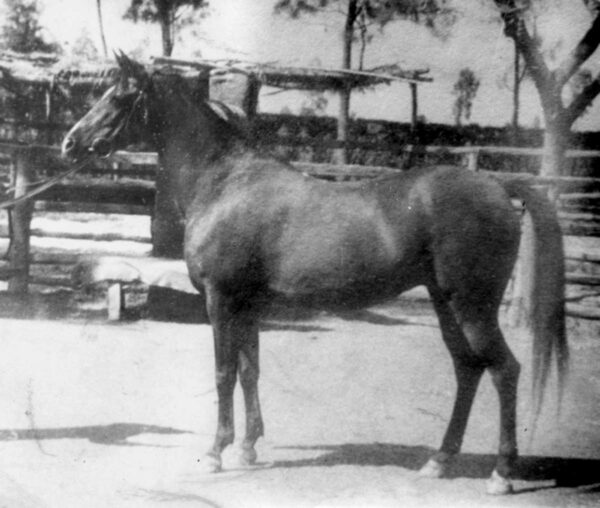
Serra’s first daughter, Bint Serra I, was imported into the United States by Henry Babson in 1932 before leaving any foals in Egypt, but she became the main legacy of Serra’s influence from her foals at Babson’s. Serra’s daughter Rasala later became a broodmare for Mr T G B Trouncer, who maintained a private stud in Egypt called Sidi Salem Stud. He was very successful in breeding good racehorses and was best known for his Skowronek son Registan, who became the sire of Rasala’s foals, thus her line did not continue in straight Egyptian breeding. However one of Rasala’s most famous representatives is the champion English sire Fakhr El Kheil. The next four produce of Serra, which do not appear in any studbooks, do not have any known straight Egyptian production. Serra’s son, Ibn Serra, was acquired by the Inshass Stud from Prince Kemal El Dine. He sired two daughters at Inshass, but eventually the lines to him died out. This left only one remaining foal of Serra whose blood did continue in straight Egyptian breeding, the grey stallion Zareef, also known as Zareif. It seems likely that he was Serra’s last foal. Around late 1932, Prince Kemal El Dine dispersed his horses and Serra, along with a number of her produce, went to the Sidi Salem Stud. In modern times, all that continues from the magnificent Serra in straight Egyptian breeding is the blood of Bint Serra and of Zareef.
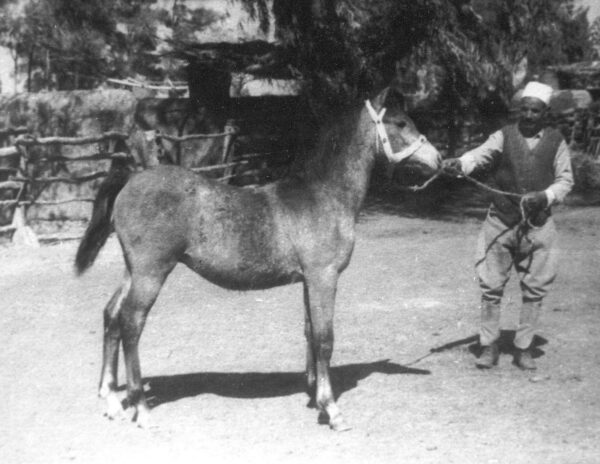
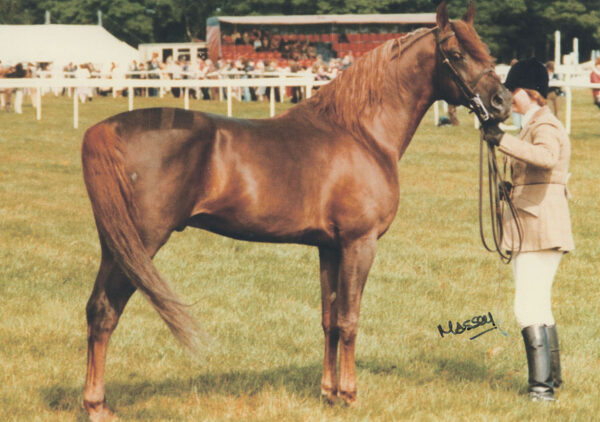
The mare Bint Serra I was an impressive dark bay mare of high quality and was already nine years old in 1932 when Jack Humphrey saw her. He was very taken by her, trying very hard to negotiate a price but was unable to buy her. She had long powerful shoulders, prominent withers and fine carriage of neck and was said to be an excellent mover. Fortunately for US breeders, Henry Babson was later able to acquire her that same year. Bint Serra I was quite prolific, producing 10 foals. She arrived in the US with a chestnut colt named Metsur (sired by Rustem) at her side, but he died before he was of breeding age. While Bint Serra’s line blended well with other American lines, only three of her get carried on to the present day within straight Egyptian lines. These three are her two sons Fay-El-Dine and Fa-Serr, and her daughter Fa Deene, all sired by Mr Babson’s imported Egyptian stallion Fadl (Ibn Rabdan x Mahroussa). Fay-El-Dine and Fa-Serr became prolific and popular sires, carrying on Serra’s influence at the Babson Farm. Often Fa-Serr would be bred to daughters of Fay-El-Dine, thereby doubling the influence of Serra. British National Champion The Shah traces to both Fa-Serr and Fay El Dine. To further intensify this blood within the Babson programme, Fa-Serr was bred to his full sister Fa-Deene producing the popular stallion Ibn Fa-Serr. Ibn Fa-Serr was not only a prolific stallion, but he sired numerous major show winners. His get were often superior movers with long powerful shoulders and good size. He is the sire of Ahroufa (three crosses to Serra), dam of the great German sire Mohafez. Ahroufa’s full sister Roufah was US and Canadian Top Ten Champion, many times a Class A performance champion and dam of the celebrated sire NaIbn Moniet.
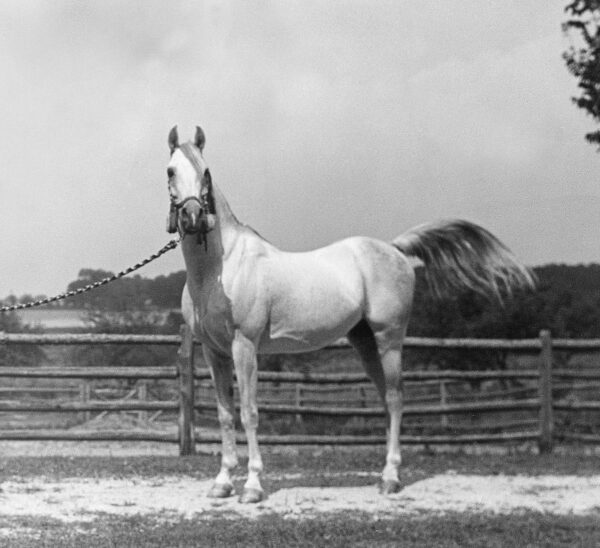
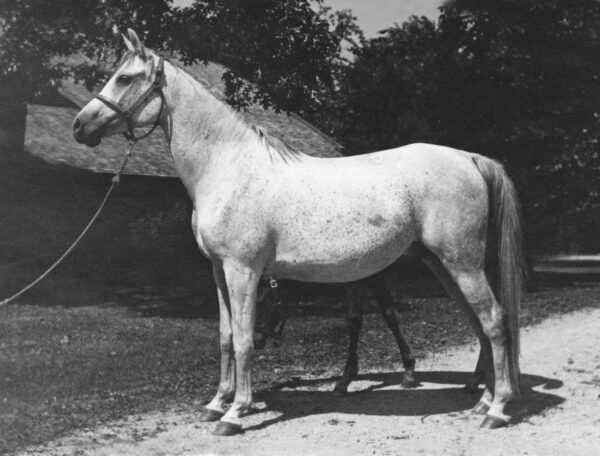
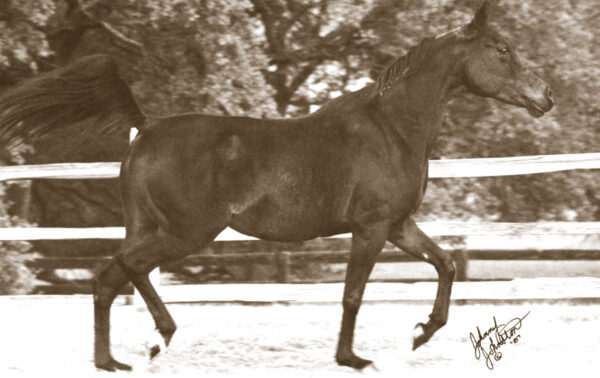
Fa Deene continued an important tail female line to Serra in straight Egyptian breeding. Who could forget some of the lovely Serra tail female mares of Nazeer/Babson breeding such as SES Khebria, Paris World Reserve Junior Champion, and the exquisite Bint Fa Dena (Ansata Ibn Halima x Fa Dena by Fa-Serr)? Bint Fa Dena and her full sister Il Bint Khedena were much admired mares by many. Bint Fa Dena produced the beautiful Monadena (ex Ibn Moniet El Nefous), and also the strikingly handsome black stallion Fa Daalim (three crosses to Serra) a prolific sire. Il Bint Khedena is best known as the dam of AK El Sennari (ex Ibn Moniet El Nefous) a popular sire in the US, Belgium, the United Kingdom, Jordan and Egypt. Fa Daalim’s full sister Bint Daaldan became an important foundation mare for Abitibi Farms in Quebec, Canada, producing many fine horses from this line including the beautiful stallion Safeen, with get in Belgium, Morocco and Jordan. Safeen is the sire of the beautiful MB Moneena in Germany, dam of international champion Ansata Qasim. Another admired international sire is Akid Geshan with eight lines to Bint Serra. Zichy Thyssen Arabians in Argentina has built a large Egyptian family based on tail female lines to Bint Serra. A separate article could be written about just the influence of Bint Serra since she is now very widespread in Egyptian breeding, and no doubt the main source of the blood of the lovely Ali Pasha Sherif mare Serra.
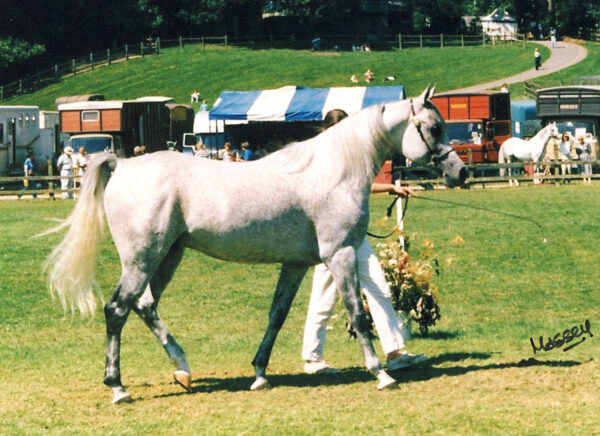
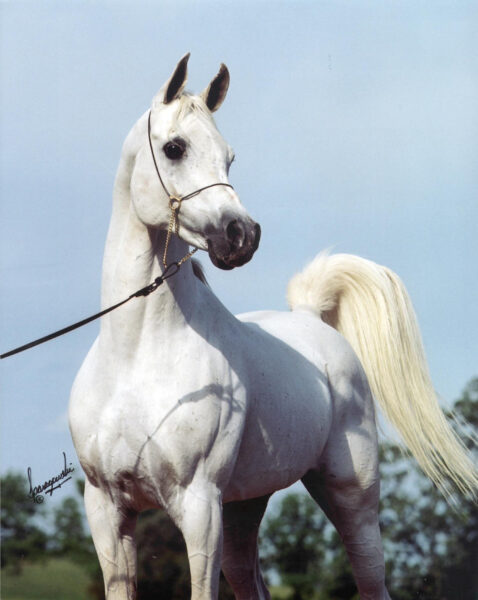
It is interesting that Serra’s son Zareef (ex Rustem) managed to also carry Serra’s blood into modern day Egyptian breeding through just one daughter, Atlus, who produced Fadila, a 1946 grey sired by the great Sheikh El Arab, sire of Halima and other important mares in Egypt. Fadila had only one daughter that carried forward, the 1966 chestnut mare Naglaa (ex Mamdouh), foaled when Fadila was 20 years old. Were it not for Naglaa, the line to Zareef would have certainly died out. Naglaa was then exported from Egypt to Germany in 1971 producing 14 foals, mostly daughters. Three of Naglaa’s daughters came to the US, Nashakla (AK Nashakla), Naglaana, and Chrymont Nasirah. This last mare did not produce, but Nashakla and Naglaana did. Both were sired by Shaker El Masri, sire of the legendary El Shaklan. Both left produce in Europe before being exported to the US, with Nashakla and Naglaana both described as chestnut mares of good size and excellent movers. Several of Naglaana’s produce were also later imported to the US. David Myers, of Renaissance Egyptian Arabians, remembers Nashakla as a tall chestnut mare with lots of roaning in her coat and a great mover. Jody Cruz of Rancho Bulakenyo acquired Naglaana’s daughter Maligana (ex Malik) and describes her as a really beautiful mare with huge black eyes, pretty head and ears, also well bodied and correct. Both Naglaa daughters have descendants in the US winning in performance classes. Naglaa’s influence has remained prominent in Europe as well predominantly through her daughters, all being quite prolific.
Upon reflection it is ironic that the splendid Serra’s only straight Egyptian-producing daughter came to the US where her legacy became dominated by the male lines from her, while Serra’s only surviving son Zareef, was narrowly preserved through one daughter who, when arriving in Europe, became prolific with a large number of daughters. Either way we are fortunate to have the legacy of this highly celebrated mare Serra preserved to this day, a legacy that I am sure Lady Anne Blunt would be proud of.
Footnotes:
(1) Lyons, Carol, Egypt in 1932 – A Report by Jack Humphrey to W.R. Brown, Khamsat, Vol. 4 No. 3, 1987, pgs. 31-41
(2) Abaza, Fouad, The Arab In Egypt, from The Journal of The Arab Horse Society 1935-1938, reprinted by Alexander Heriot & Co. Ltd, 1979, p. 112.
Part two of this fascinating feature, first published in March 2012, will be shared on TheArabianMagazine.Com next week