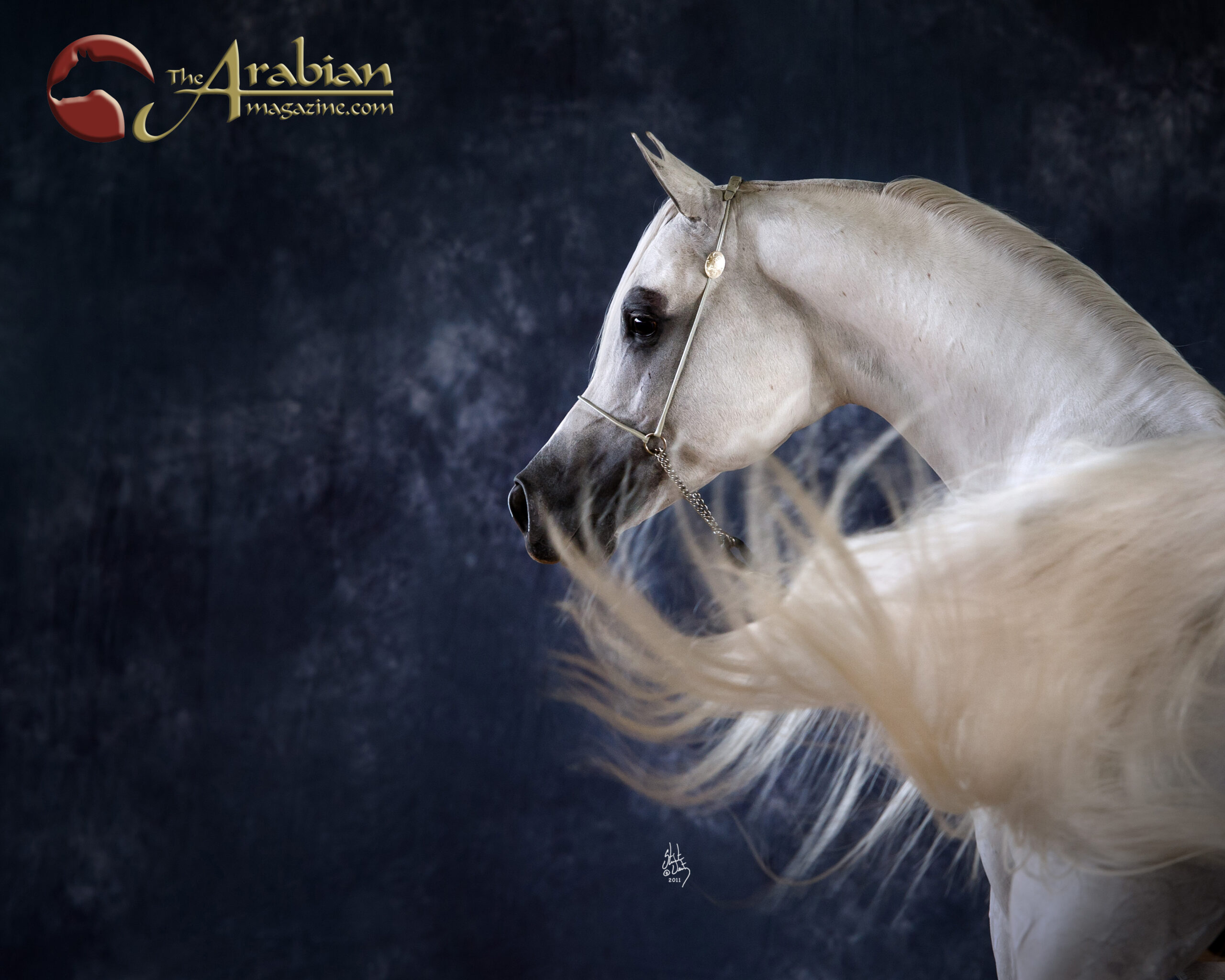
Mulawa Arabian Stud is our premier sponsor for 2025, and we are honoured to share their history of their fifty-plus years breeding programme through TheArabianMagazine.Com. This month, we celebrate their incredible stallion, Klass, who died in May. Over the coming week, we will look at the life and legacy of this extraordinary Arabian horse, who truly was in a Klass all of his own.
The Arabian horse world bid farewell to one of its greatest and most beloved global ambassadors with the premature passing of Klass on 28 May 2025. The definitive Mulawa-bred Arabian of the new millennium and a show horse and sire without equal in Australia, Klass epitomised the classic Arabian in every respect – exemplifying both the undeniable phenotypic appeal and the infinitely versatile utility for which the breed has been revered for centuries. The ultimate beautiful athlete, Klass not only raised the standard for what is achievable for the Arabian horse in all his ambitious pursuits, but he also, even more profoundly, transmitted his exceptional attributes with remarkable consistency onto generations of descendants who continue to enrich the breed the world over.
A colt of Klass’ quality and promise had long been in the planning at Mulawa, beginning first with the purchase of his glorious dam Karmaa in 1989. The daughter of World Champion Kaborr (Naborr x Bint Kholameh by Adibyez) and United States Reserve National Champion AN Marieta (AN Malik x AN Fayrosa by Fadjeyn), Karmaa was sagaciously purchased by a honeymooning Greg and Julie Farrell at the Tom Chauncey Auction during the annual Scottsdale All-Arabian Horse Show in 1989. Although acquired well into Mulawa’s second decade of existence, Karmaa revolutionised the programme in short order, capturing not only the Mare Championship titles in her very first outings at the prestigious National Stud Show and East Coast Championships, but also by blessing the breed with twelve superlative progeny, a remarkable nine of which were daughters. Branches of her invaluable family still thrive at Mulawa through four of those precious daughters – Mulawa Aria (by Arrival), Mulawa Kara Mia MI (by GLF Apollo), Mae Marie (by TS Al Malik) and Mulawa Karismaa (by Magnum Psyche) – making the Karmaa dam family at Mulawa the most abundant, the most beloved and unquestionably the most successful.

Not only have the female descendants of the Karmaa family been incredibly prolific at producing replacement daughters generation after generation, but these meritorious matrons continue to be equally prodigious at producing sire quality sons, the result of which is more than a dozen influential stallions whose exemplary progeny are now widely distributed worldwide. Most astoundingly of all, more than 95% of the breeding stock comprising the modern day Mulawa programme can claim at least one cross to Karmaa, making her irrefutably the most influential mare in Mulawa history and one of the most legendary broodmatrons ever to call Australia home. Famed for her ethereal beauty, grace and femininity, Karmaa possessed an undeniable aristocratic elegance and captivating presence, tempered by a sage maternal confidence. Her superb balance, harmonious design and desert dry, refined constitution splendidly accentuated her luminous dark eyes, her capacious nostrils and her long, lean, elegant neck and throat, hallmark features for which the Karmaa descendants are still revered today. Rightfully venerated as the Queen of Mulawa, Karmaa was a once-in-a-lifetime mare for the Farrell family, and the unrivalled heart horse for Julie.
A subsequent trip to Scottsdale just seven years later resulted in the paternal piece of the puzzle, when Greg, Julie and Jane discovered the young Brazilian-bred TS al Malik (Hello Barich ELS x BF Tiffany Select by BF Rageymazon) at Midwest Training Center while searching for future herd sires. With a strong Gainey, Raffles, Spanish blend pedigree with just a touch of reliable Polish bloodlines through both his sire and dam, Malik represented a genetic gamble for the Mulawa programme in spite of his more than pleasing phenotype. Tall, substantial, superbly conformed and imposingly masculine, Al Malik was blessed with an incredibly long, well-shaped and perfectly placed neck, a magnificently long laid-back shoulder, and a full square powerful hindquarter, the combination of which powered his impressive natural athleticism. With a commanding presence that unfailingly amplified in the show-ring, TS al Malik was unsurprisingly named Scottsdale Reserve Champion Stallion by week’s end, the youngest ever to be so named at just thirty-eight months of age, elevating Mulawa’s hope for the young stallion as his proud new owners.
Following another full show season campaigning in North America, TS al Malik arrived in Australia just in time for the 1998 breeding season to commence his most important duties, that of chief sire. While the perfect complement for a large portion of the Mulawa broodmare band, the greatest hopes for Al Malik were with Karmaa, as the Farrells were convinced that the genotypes and phenotypes of both would blend perfectly. So successful would this Golden Cross prove to be that is was repeated four years in succession, resulting in daughters Mae Marie (November 1999) and Mulawa Marieta (January 2002), as well as sons Karbon (November 2000) and Klass (January 2003). All would mature into horses of merit and prestige, both in the show-ring and within breeding programmes Australia-wide, but none more so than Klass, the fitting bookend to this famous quartet of siblings and, most poignantly, the final son for the immortal Karmaa.
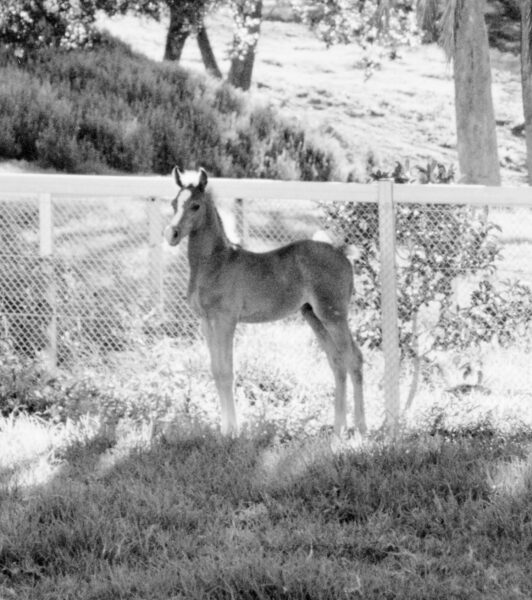
“From the moment I first saw Klass as a young foal,” Greg fondly recalls, “I knew he was special. He had the structure and scope of his sire TS al Malik and the refinement and elegance of his dam Karmaa, just as we had hoped.” Julie remembers Klass as a “cheeky young colt who loved being the centre of attention, with a spark that drew people in from the very beginning.” Jane vividly recollects “this calm, confident, chestnut colt walking around the side of Karmaa” on her first visit post-arrival. “He just stopped, completely square and correct on all four legs with an improbable self-confidence, looking straight into your soul as if to say, ‘YES – I AM HERE’”. For Greg, who was incredibly pleased with the final product from the cross in which he had placed so much expectation, the choice about what to call this promising colt was obvious and matter of fact. “He named himself, truly – as he was totally a class above any colt to that time that had been produced by Mulawa.” Greg’s appreciation of that young colt would blossom and mature over the course of the next two-and-a-half decades, in the roles of trainer, handler, caretaker, breeder and ultimately, as a companion, into the closest and most rewarding relationship he would share with any horse in his lifetime.
Being born into greatness carries its own sense of responsibilities and burdens, and for Klass, that inevitably meant a career as a show horse. Fortunately, his superlative structure, his exceptional type and quality along with his inherent self-confidence and imposing presence made him a standout as a halter horse, even if his enthusiasm for this necessary endeavour was seriously lacking. Despite Klass’ reluctance, Greg remains reassured, nonetheless, that “Klass enjoyed an exemplary show career with records that remain unbeaten in Australia.” Shedding insight on Klass’ unique personality, Greg describes the late legend as “not a natural, finding repetition tedious and boring, with the inability to see the point in performing the classic halter pose more than once, let alone successively in training or at a show. As a handler, he taught me to think differently, challenging me to find new methods to keep him happy and engaged, so that his best abilities could be appreciated despite his lack of interest. Klass pushed me further than any horse before or since; he made me a better horseman.”

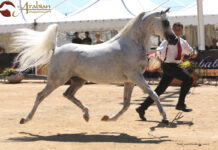
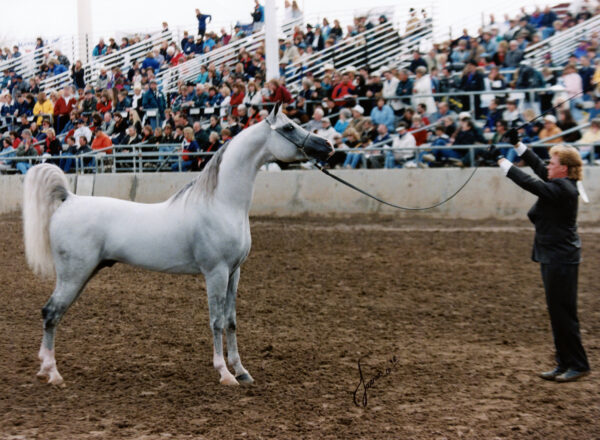
The debut show for Klass in early 2004, just days after his first birthday, would prove to be the event at which he would establish his first unprecedented, and still yet unbeaten, record of achievement in the show-ring. This was the prestigious East Coast Championships, where his dam Karmaa had been named Champion Mare fourteen years earlier, which in the first decade of the new millennium, was the largest and most competitive Arabian horse show in Australasia. Jane still recalls his debut with great clarity, “a very proud Greg at his side while Klass entered the ring with that same calm arresting surety I had witnessed soon after his arrival, drawing the attention of all by simply being.” Klass would go on to not only win the Yearling Colt Championship in his premiere performance, but he would also finish his career undefeated at the East Coast Championships over the course of four successive years, winning the championship in each age division for which he was eligible, concluding with the Stallion Championship at the earliest age possible in 2007. “His four East Coast wins were my favourite memories of Klass as a halter horse,” Jane fondly reminisces. “He made us all so proud, even with his casual approach. You just couldn’t deny his completeness.”

That same record of unprecedented achievement took some serious practice at the Australian National Championships, the event that boasted the most coveted title on the continent, with Klass having to settle for the title of Australian National Reserve Champion twice, first as a colt in 2006 and again as a stallion in 2007, before blowing both covers off the record books. In 2009, the very first year the international score card was introduced for halter horses at the Aussies, Klass was the direct beneficiary of a vastly improved method of evaluation that favoured objectivity and adherence to the standard rather than a more subjective ‘which horse put on the best show?’ approach. In a strong collection of contenders, Klass was justly sashed Australian National Champion Stallion, with both Mulawa-bred paternal brother Fire Alert (TS al Malik x Fire Flame by Fame Maker R) as Reserve National Champion Stallion and an elated Team Mulawa beaming with pride standing alongside for the celebration win shot. This was to be Klass’ final foray in the show-ring as a halter horse at just seven years of age, capstoning an unparalleled career with the most prestigious title in Australasia, before embarking on a revolutionary turn as a performance horse that both redefined excellence and re-established versatile capability for the breed in the modern era.
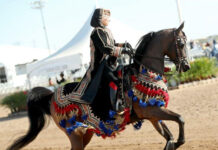
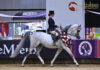
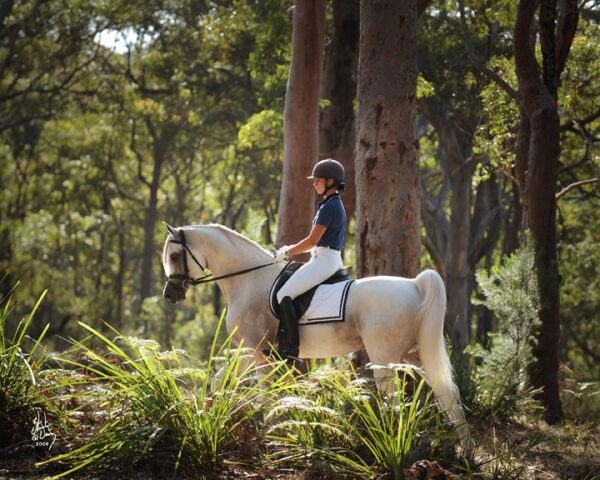
Having already begun saddle work to assist with psychological and physiological training and preparation during his final years as a halter horse, Klass made an easy transition to the more demanding and disciplined daily schedule of a top level performance horse. With resident trainer Daniella Dierks in the saddle, Klass embarked on a full show season as a ridden Arabian stallion, which presented its own set of challenges for a full-time breeding stallion during the first few outings in the spring. Jane is quick to praise Daniella’s skill and experience “as Klass had a preference for grey mares in the breeding barn. Knowing this, Daniella soon learned to steer clear of any other grey stallions on the circle that might prove a distraction, and any irresistibly appealing grey horses in the championship final.” After a few animated and invigorating starts, Klass and Daniella hit all the right notes at the Australian National Championships in early March to conclude the season, taking home the highest honours of Champion Ridden Arabian Stallion. With this hard earned triumph, Klass was elevated to the rarified status of Arabian stallions honoured as National Champion in both halter and performance, an elite club of icons that includes some of the most legendary and influential stallions in the breed from the last century, such as Bask, Khemosabi and Aramus. Making the achievement even more significant was its occurrence right on the heels of his win as Australian National Champion Stallion, making Klass the only horse ever to be named back-to-back National Champion as both a halter and as a ridden stallion in the Australian show-ring.
For his next and final act as a show horse, Klass was fortunate enough to find another supremely talented and masterfully skilled horseperson, the third in succession in his improbably charmed life, to teach him the fundamentals of a uniquely Australian discipline, that of working stock horse. In this pursuit, Klass would not only be competing against the most athletic and intelligent Arabians continent wide of all genders, he would also have to outperform the best Arabian derivatives in the country as well, including those crossed with stockhorse breeds that invariably granted them a distinct advantage in the sport. Undaunted by the challenge, Rodney and Klass set to work just weeks after his record-setting Aussies win under saddle, and according to Greg, “Klass had finally found his happy place as a show horse. The inherent energy and variety of the stock horse work suited Klass’ intelligence and disposition, while his natural athleticism and superior structure made the work easy and fun.”
“Greg never believes in repeating a goal successfully achieved,” Jane explains, “which made Klass’ evolution from traditional halter and ridden stallion to working stock horse all the more exciting and challenging. Together, Rodney and Klass were a marvellous pair, mastering the fast runs, quick turns, ground ties and crackling stock whips with characteristic confidence and ease. Their first win at the National Stud Show was an eye-opener for many. Once the pair was crowned Australian National Champion in Tamworth, a fitting setting in the heart of Australian Stockhorse country, there was no denying that Klass, under Rodney’s incomparable guidance, was like no other Arabian horse in the country.” Sashed in Aussie red, white and blue in honour of the show’s 30th anniversary, Klass once again made show horse history as not only the first National Champion Arabian halter and/or ridden stallion ever to be named National Champion Working Stock Horse against all Arabian-related breeds, but also, most impressively, as the one and only stallion ever to be named three-time successive Australian National Champion in separate competitive divisions.
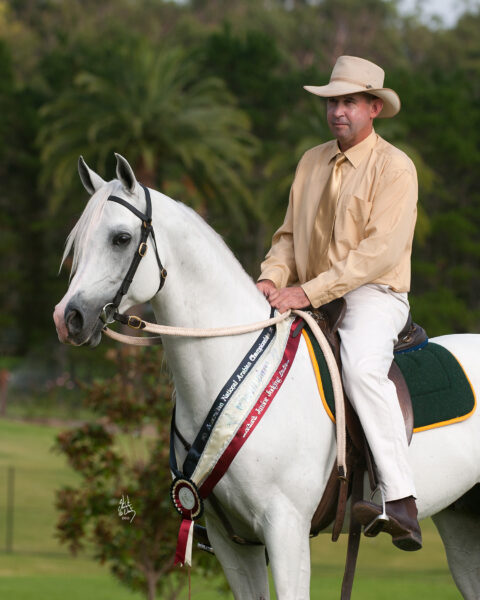
When asked innocently by an enthusiastic spectator and Klass superfan at Tamworth what was next for Klass as a show horse, Greg mused “that with nothing left to achieve in the show-ring, Klass will most likely now pursue a career as an astronaut.” This whimsical response reflected not only Greg’s immense pride and satisfaction with Klass’ record-shattering accolades in the show-ring, but also his belief in the limitless possibility of Klass as both a performer and as a sire. From the moment of his arrival, Greg had remained Klass’ greatest advocate and most ardent supporter, the two sharing a special bond that transformed both their lives immeasurably. Yet, despite eight years of unprecedented show-ring achievement, Klass’ most laudable era of his career was already underway: that of Mulawa chief sire, and his eventual veneration as international sire of significance.

Part two, Klass the sire, will be published later this week.