A new fine art publication, Bogucki, Capturing the Vibrancy of Life, offers an intimate and comprehensive look into the extraordinary career of sculptor and painter Edwin Bogucki, an artist whose work was driven by curiosity, discipline, and a lifelong devotion to realism. This impressive book is very touching, definitely a must have for anybody interested in equine art. Browsing through the lavishly illustrated work will give the art enthusiast goosebumps. This book was a labour of love, and love is an important element here. Edwin’s love for his family, for horses, especially Arabians, for art as well as people. All of this can be vividly felt and understood when reading the book. It contains a major retrospective of Edwin’s work, a selection of personal photographs, as well as memories and stories from his life. The book manages to not only give an overview of his work but also an impression of Edwin’s personality and views.
Soft-spoken yet deeply passionate, Edwin possessed an innate fascination with the world around him and an exceptional artistic gift. Over a career spanning more than fifty-five years, these qualities shaped a remarkable body of work dedicated to one central pursuit: capturing the vibrancy of life. His sculptures and paintings reveal a profound sensitivity to form and movement, seen always through the eyes of an artist relentlessly committed to truth and realism.
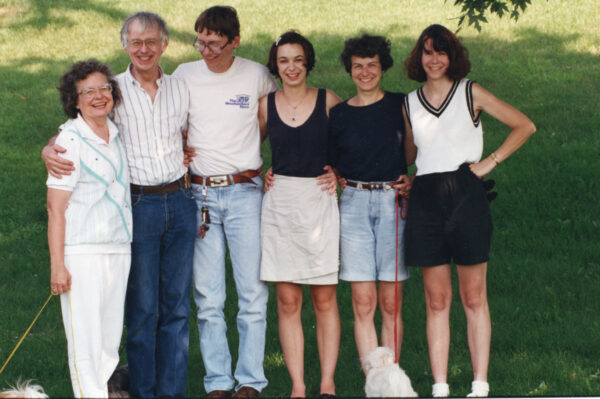
Painstakingly researched and written by Edwin’s daughters, Sheri and Kathi, the book is both a visual archive and a moving personal narrative. It features more than 1,000 high-quality photographs documenting his sculptures and paintings, interwoven with the inspiring and poignant story of his life. The result is not only a celebration of artistic achievement but also a deeply personal portrait of the man behind the work. More than a monograph, this publication is a tribute, preserving the vision, discipline, and vitality of an artist who devoted his life to seeing, and showing, the world as fully alive.
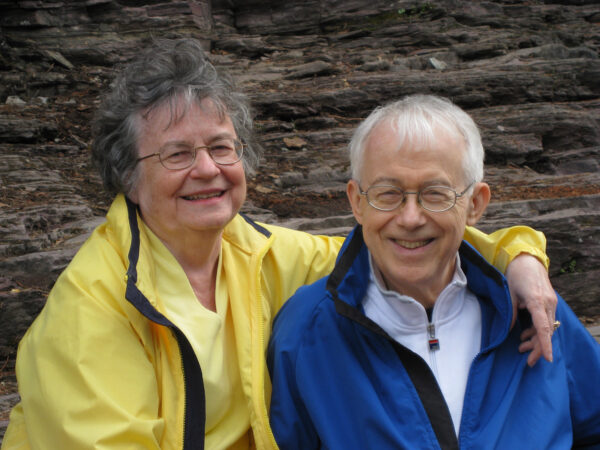
Kathi explains: “Sheri and I feel so fortunate that we were able to fulfil our mother’s dream of creating a book about our father and his work. We regret that we weren’t able to complete it before our parents passed away, but the entire project took so much longer than anyone had anticipated. Many people told us we weren’t obligated to finish it after Mom and Dad were gone, but we had made a commitment and a promise to them as well as to each other that we would see the book through to completion.
“Over the past three years, we have devoted the majority of our time to identifying, researching, cataloguing, and chronicling our father’s art and the stories of his life. As we worked, our days were filled with the excitement of new discoveries, frustration at the often slow progress, and regret that our parents weren’t here to answer our many questions. We laughed together a lot and did our fair share of crying, too. In many ways, Sheri and I could feel Mom and Dad with us the entire time, quietly sharing the whole experience.
“In our quest to include as much of our father’s body of work as we could, hundreds of old photographs were scanned and restored, one at a time, while new digital photographs were taken of pieces in the family collection. We cast and finished several sculptures specifically so they could be photographed for the book. While we tried our best to include all of his artwork, there were still at least thirty pieces of that we were unable to include due to poor quality or missing photographs, as well as thousands of sketches – in pencil as well as clay – plus many smaller works, and several unfinished paintings and sculptures.”
Edwin Bogucki was not only a phenomenal artist but had also an unforgettable personality. Born on July 5, 1932, in Racine, Wisconsin, Edwin grew up in a family of immigrant parents, both coming from Poland. From an early age, he was taught to be self-reliant and resourceful. His independent and inquisitive nature led him to explore the city alone from a young age, and he often said he “lost track of time” as a child, never quite finding it again. Time, it seemed, was never his concern. He marched to the beat of his own drum throughout his life, following his instincts wherever they led.
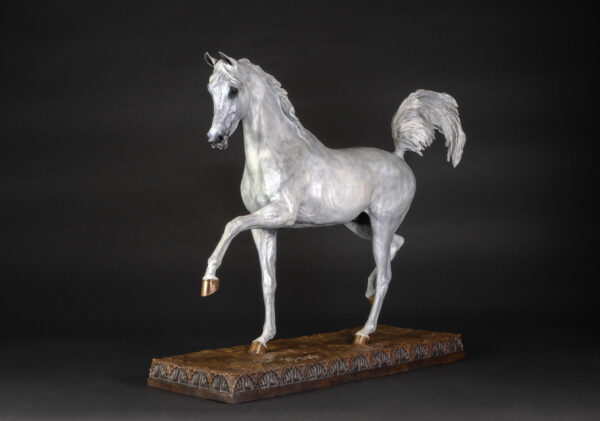
Edwin’s lifelong fascination with horses began almost mythically. At just two years old, he encountered a group of escaped circus horses that wandered onto his family’s lawn to graze. The sight filled him with wonder, excitement, and awe – emotions so powerful that they never left him. That early thrill became a guiding force throughout his life and artistic career, inspiring him to recreate that same sense of magic in his work so that others could experience it as well.
Horses continued to shape Edwin’s life in ways he could never have foreseen. One such moment proved deeply personal: In 1952, during the Racine 4 July parade, he spotted Shirley, the woman who would become his wife, riding her horse. He was immediately smitten, and they became engaged before he was drafted into the Army. They married on 1 September 1953, and Edwin served as an artist in the Counterintelligence Corps during his time in the military. After his discharge, he worked in advertising for a while before reading a book titled How to Make a Living as a Painter, which inspired him to quit his job and pursue a full-time career as an artist.
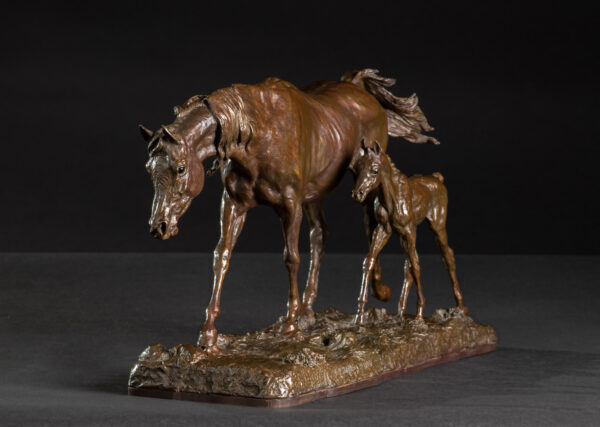
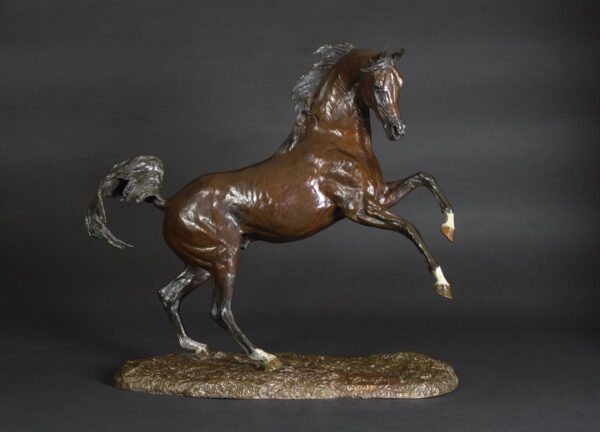
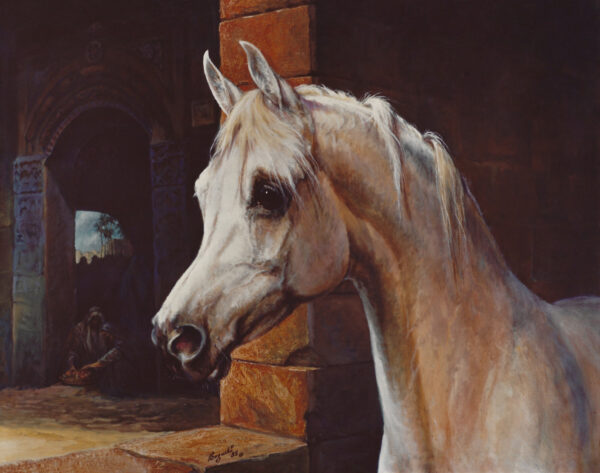
A defining chapter began in 1954, when Edwin saw his first Arabian horse. Living with his wife in Baltimore, Maryland, the couple attended a horse show taking place just across the street from their home. Edwin would later recall the encounter vividly. Tied to a tree stood what he described as the most beautiful horse he had ever seen. The stallion was Indraff (Raffles x Indaia), a legendary Arabian from Bazy Tankersley’s renowned Al-Marah Farm. Intrigued, the couple soon visited the farm, where Edwin found himself completely mesmerised by the horses surrounding him. One scene in particular left a lasting impression. When the farm’s trainer casually handed him the lead rope of a stallion, Edwin became so absorbed in the animal’s presence that he nearly put himself in danger. The horse, he recalled: “literally led me back to the barn.” Lost in the depth of the horse’s dark eye, the artist in him had taken over. The experience was nothing short of an epiphany. Edwin spoke of the Arabian horse with reverence, captivated not only by its physical beauty but by its history and spirit. To him, the Arabian was unmatched – beautiful from the skin on the outside to the soul within.
When Edwin returned to Wisconsin, he began building a reputation as an equine portrait artist, producing commissioned pastel and oil paintings of Saddlebreds and Thoroughbreds. While he appreciated each breed’s unique qualities, the spark ignited by his encounters with Arabian horses never faded. Determined to explore that passion, he immersed himself in research and began creating Arabian-themed works for gallery exhibition. Collectors and admirers of the breed quickly took notice, and demand for his art surged among an entirely new audience.
Though his paintings were highly sought after, this new group of patrons offered Edwin something even more meaningful: the opportunity to fully embrace sculpture, the discipline he loved most. At that time, he had created only four bronze works. Now, his artistic world expanded rapidly, and he soon emerged as one of the most versatile equine artists of his era.
In a gesture that symbolised how deeply his art and life had become intertwined, Edwin traded one of his prized paintings for his first Arabian horse. Having such a magnificent animal just steps from his studio door was the fulfilment of a long-held dream. Over time, he acquired more Arabians, including an Egyptian-bred mare named Binis Tara (Binis x HMR Bint Bint Binni). She produced an extraordinary colt by El Mareekh (Aseel x Rawayeh), whom Edwin named Cairo Mareekh.
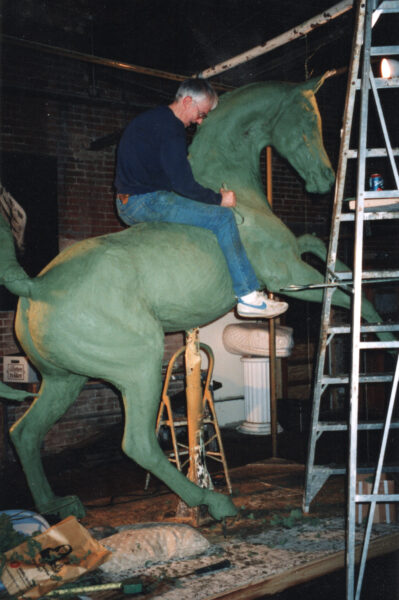
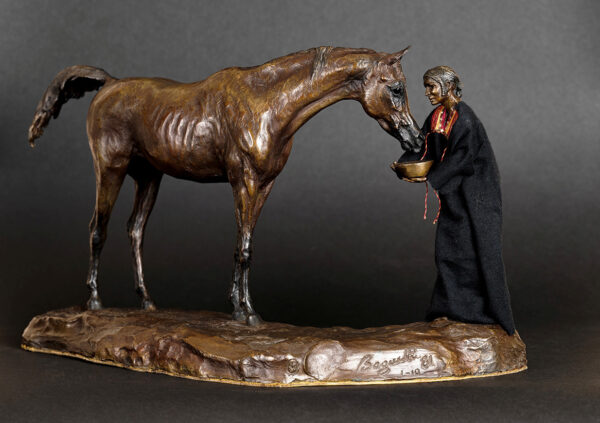
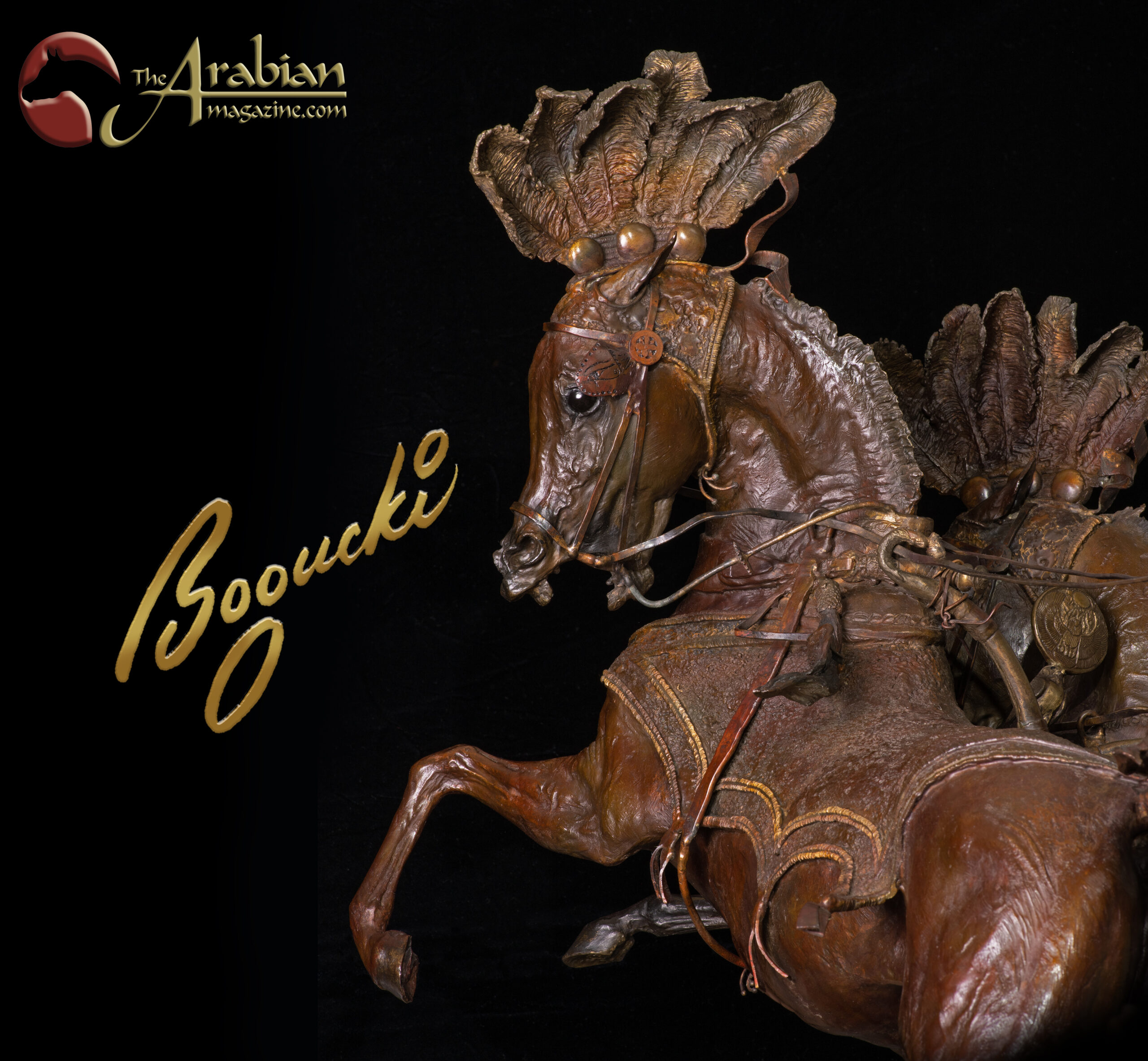
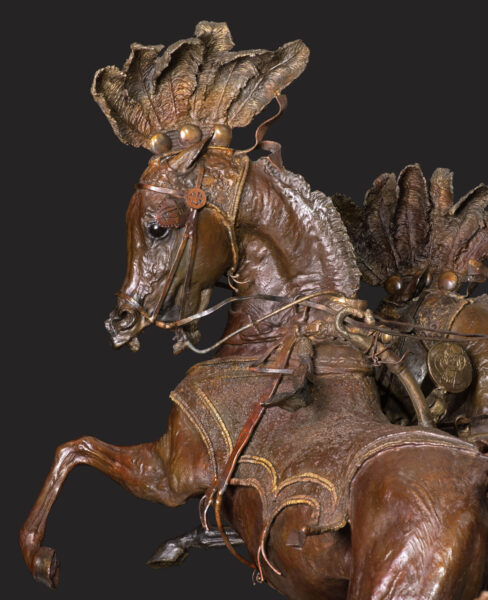
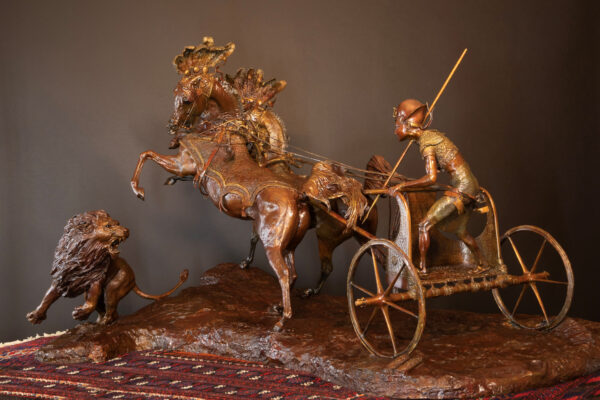
Cairo Mareekh – intelligent, expressive, and very typey – became the artist’s greatest muse. The bond between horse and artist was unusually strong and endured for all thirty-two years of the stallion’s life. This deep connection with Egyptian Arabians ultimately led Edwin into an intense period of artistic obsession, one that consumed more than a year and culminated in what many consider his greatest masterpiece – Tutankhamen: Pharaoh of Egypt. In that work, as in so much of his career, Bogucki succeeded in capturing not just the form of the horse, but its enduring spirit and timeless beauty.
Edwin Bogucki could easily be regarded as the last of the great Animaliers, a master of capturing the living, breathing essence of animals through art. Grounded in the classic techniques of the old masters, Edwin took a bold approach to his subjects, breathing new life into a genre that had long been defined by tradition. His work, though rooted in the past, was anything but conventional. By imagining himself as part of the scene rather than merely an observer, he gained an unparalleled understanding of motion and expression. Each of his creations reflects the unique spirit of an artist who followed his creative instincts without fear, always striving toward the sublime.
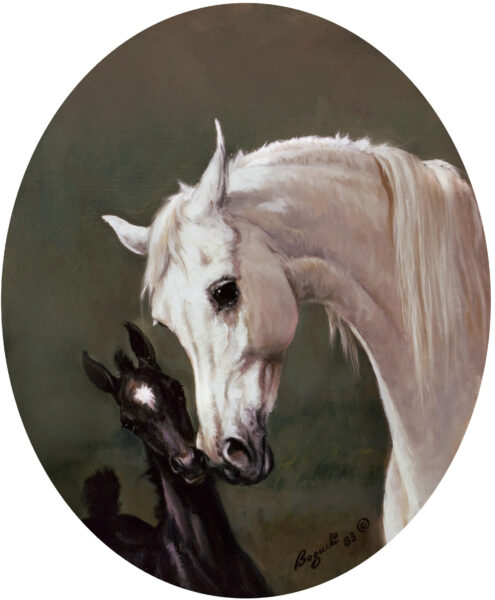
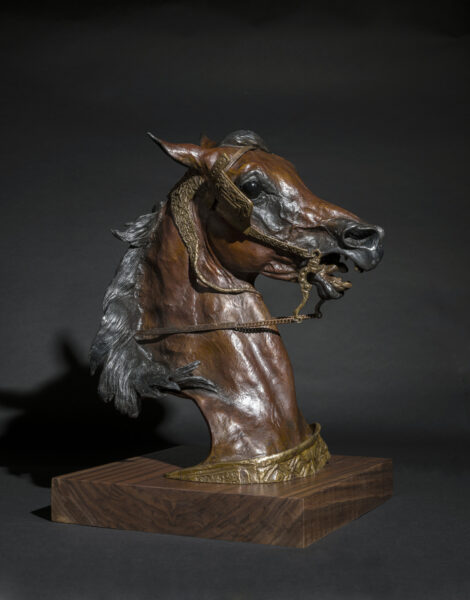
In his later years, Edwin’s daughters, Sheri and Kathi, took on the responsibility of preserving his artistic legacy. They established a trust to protect and curate his extensive collection, and they made it a priority to complete the limited editions he had started, ensuring that as many pieces as possible would be finished while the moulds were still viable. Although Edwin passed away in 2021, the studio remains active, now in the capable hands of Sheri and Kathi, who were mentored by their father throughout their lives. By continuing the tradition of mould-making, wax working, grinding, and patination in-house, they honour the high standards their father set, ensuring that his work remains true to his vision for generations to come.
Despite the formidable challenges of becoming a freelance artist, Edwin succeeded in building a reputation as one of the finest artists of his generation. His specialties included painting and sculpting horses, as well as other animals and people, and his works are now part of private and public collections around the world. Though he was unassuming and soft-spoken, Edwin had a unique gift for connecting with people. At public exhibitions, visitors were drawn to him, eager to hear him speak about his art and the stories behind his sculptures. He would often be the last to leave an event, whether it was a church service, a school play, or a high-profile gala. “Is there anyone left that I need to talk to?” he would ask his family, always eager to connect with anyone and everyone, from royalty to custodial staff, with the same genuine interest and warmth.
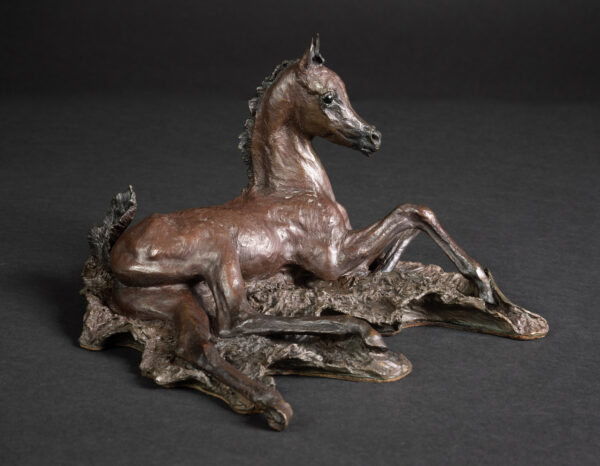
Edwin Bogucki’s legacy as an artist and a man is one of unflinching dedication to his craft and an unwavering passion for life. Through his work and his personal connections, he brought the vibrant energy of the animal world to life, creating art that will continue to inspire and captivate for generations to come. Sheri and Kathi continue to honour his memory and work, ensuring that his artistic spirit endures through their stewardship of Bogucki Studios.
The book Bogucki, Capturing the Vibrancy of Life can be purchased through boguckistudio.com
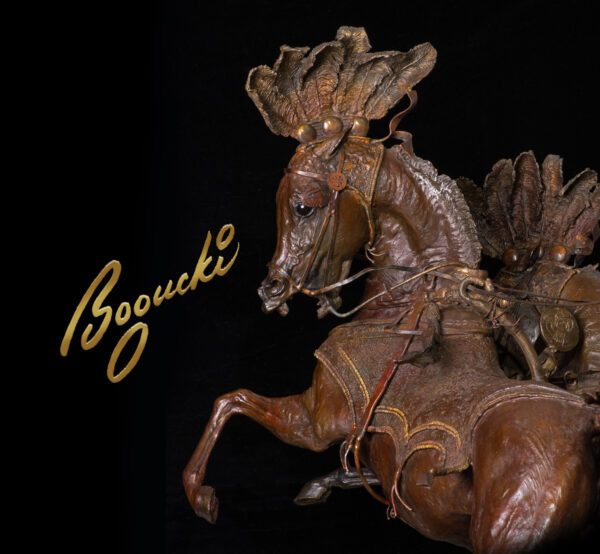
Issued in a limited edition of 1,000 copies and priced at $185, Bogucki, Capturing the Vibrancy of Life stands as a definitive record of Edwin Bogucki’s artistic legacy and an essential addition for collectors, art historians, and anyone drawn to realism at its highest level. Produced to the highest standards, this premium hardcover volume reflects the quality and seriousness of its subject. Spanning 420 pages and printed on high-quality gloss paper, with fold-out pages, durable Smyth-sewn binding, and a glossy, foil-stamped cover, the book measures 29.8 x 27.8 cm and weighs over six pounds. It is a substantial and carefully crafted object, intended as a lasting collector’s piece rather than a casual publication.